USDA Section 515 Rural Housing Guide: Eligibility & Rent Rules (2026)
 Written & reviewed by Rachel Milano · Housing Data Advocate
You're in the right place
Housing rules are confusing. We explain them in simple words so you know if you qualify and what to do next.
What You'll Learn
- USDA Section 515 provides affordable multi-family rental apartments in designated rural communities across the U.S.
- Households with Section 521 Rental Assistance pay exactly 30% of their monthly adjusted income toward rent and utilities.
- Properties serve low-income, very low-income, elderly individuals (62+), and persons with documented disabilities.
- Applications are submitted directly to private management companies operating Section 515 properties in rural areas.
Jump to a SectionShow ↓
The USDA Section 515 Rural Rental Housing Program is a federal initiative administered by USDA Rural Development that provides affordable rental apartments to low-income families, elderly seniors (aged 62+), and persons with disabilities in rural communities. In apartments supported by USDA rental assistance (under Section 521), tenant rent is capped at 30% of adjusted monthly household income.
Unlike urban public housing managed by HUD, Section 515 properties are located exclusively in federally defined rural areas and towns with populations generally under 35,000. This comprehensive guide outlines USDA rural housing eligibility, income limits, rent structures, and step-by-step application instructions.
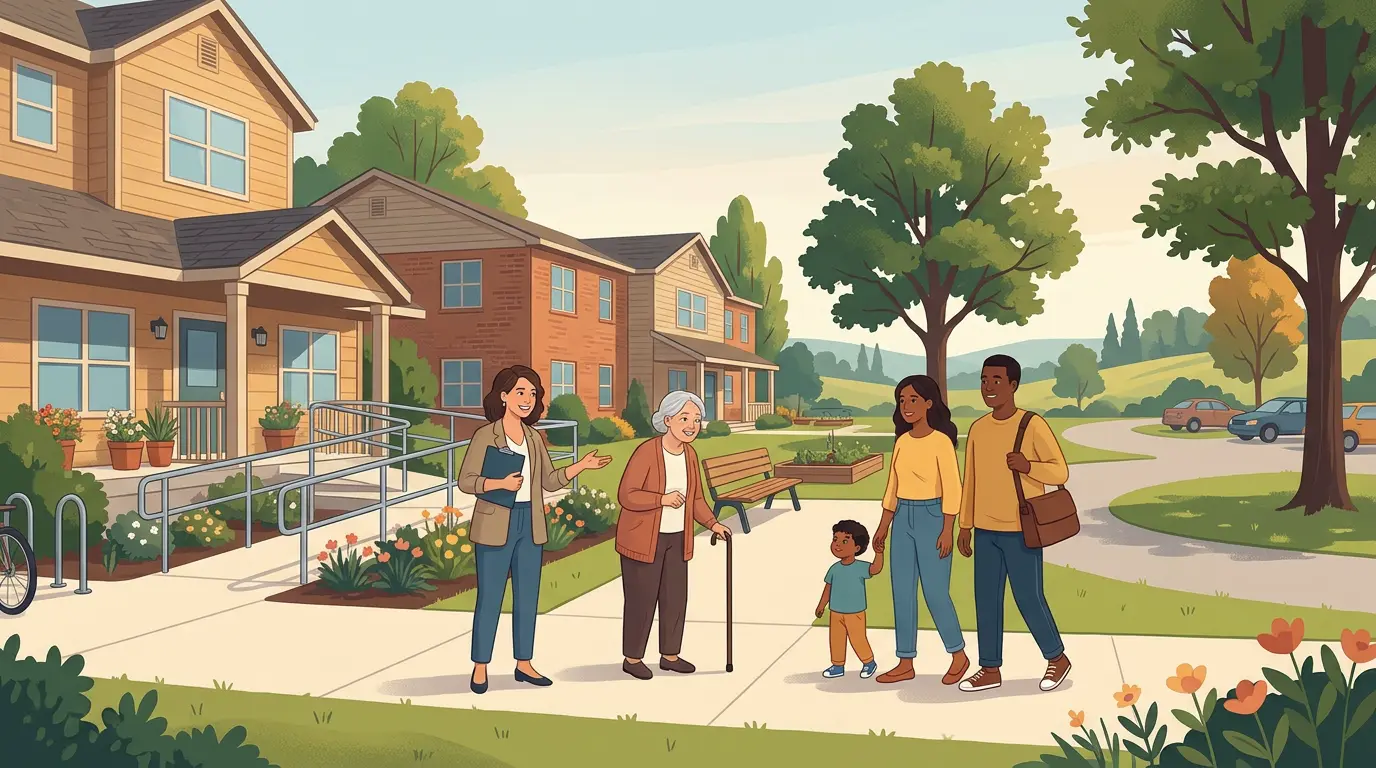
Overview: What is USDA Section 515 Housing?
Authorized under Title V of the Housing Act of 1949, the Section 515 program provides direct, low-interest government loans to non-profit entities, housing authorities, and private owners. In exchange for subsidized loan rates, property owners agree to maintain units as affordable, rent-restricted housing for very low-, low-, and moderate-income tenants.
Today, there are more than 13,000 Section 515 properties providing over 400,000 affordable rental apartments in rural areas across all 50 states and Puerto Rico.
Properties are designed in two primary community formats:
- Family Communities: Open to all income-eligible individuals and families, featuring 1-, 2-, 3-, and 4-bedroom apartments.
- Elderly & Disabled Communities: Exclusively reserved for households where the head or spouse is aged 62 or older, or has a verified physical, developmental, or chronic disability (learn how disabled renters qualify in our Disability Housing Guide).
How Rent Works: Section 521 Rental Assistance vs. Basic Rent
One of the unique aspects of USDA rural housing is how tenant rent is structured across different properties:
1. Section 521 Rental Assistance (30% Income Rule)
Most low-income residents in Section 515 housing benefit from Section 521 Rental Assistance (RA). Under Section 521:
- Your rent is set dynamically at exactly 30% of your monthly adjusted income (minus a local utility allowance).
- USDA pays the difference between your 30% share and the property's operational cost directly to the landlord.
- Even if your income is very low or drops unexpectedly, your rent automatically adjusts downward.
2. Basic Rent & Note Rate Rent (Without Rental Assistance)
If a property does not have enough Section 521 Rental Assistance units available for every tenant, rent is determined by a dual-tier rent scale:
- Basic Rent: The minimum rent required to operate the property assuming a 1% subsidized loan interest rate.
- Note Rate Rent: The full market rent based on the property's full commercial loan rate.
- Formula: Tenants pay either Basic Rent or 30% of their adjusted income, whichever is greater, up to the maximum Note Rate.
- Section 8 Vouchers: If you live in a Section 515 unit without Section 521 Rental Assistance, you can legally use a HUD Section 8 Housing Choice Voucher to pay your Basic Rent, similar to protections under Low-Income Housing Tax Credit (LIHTC) regulations.
Income Limits: Who Qualifies for USDA 515?
To qualify for admission to a Section 515 apartment, your total gross household income must fall within USDA Rural Development income limits:
| Income Category | USDA Definition | Priority Level |
|---|---|---|
| Very Low Income | Gross annual income at or below 50% Area Median Income (AMI) | Highest Priority for admission & Section 521 Rental Assistance |
| Low Income | Gross annual income between 51% and 80% AMI | Second priority for admission |
| Moderate Income | Income slightly above 80% AMI (up to 80% AMI + $5,500) | Eligible only when no very low- or low-income applicants are waiting |
Income caps are established county by county to reflect local economic conditions. Priority on waiting lists is always given to Very Low-Income households, ensuring subsidies support those with the greatest financial need.
Step-by-Step: How to Apply for USDA Section 515 Housing
Because USDA Section 515 housing is decentralized, follow these four practical steps to apply:
Step 1: Find USDA Rural Properties in Your Target Area
Locate USDA-assisted communities using the USDA Rural Development online property directory or by contacting your local USDA Rural Development service center. You can also search rural listings on Find My Housing.
Step 2: Contact the Property Management Agent
Each Section 515 complex is operated by an independent property management company. Call or visit the local leasing office to:
- Inquire if Section 521 Rental Assistance is currently available or if there is a waiting list for rental assistance.
- Request a written tenant application packet.
- Ask for the property's Tenant Selection Plan to review local preferences.
Step 3: Gather Verification Documents
Property managers must verify household size, income, and assets. Prepare:
- Government photo IDs and birth certificates for all occupants.
- Social Security cards.
- Proof of income (Social Security award letters, pay stubs, pension statements, child support).
- Bank statements for all open checking and savings accounts.
- Out-of-pocket medical expense records (for elderly or disabled households to claim rent deductions; learn what qualifies in our Medical Deductions & Rent Calculation Guide).
Step 4: Submit Paperwork and Track Waitlist Status
Submit your completed application to join the property's official waitlist. Maintain written records of your application submission date, follow up with the management office every 6 months, and promptly notify them in writing if your address or phone number changes.
Related Housing Assistance Guides
- HUD Section 202 Senior Housing Eligibility & Age Rules — Subsidized apartment communities reserved for seniors aged 62 and older.
- Low Income Housing for Disabled: Complete Programs & Rent Guide — Program options, 30% rent formulas, and voucher rules for disabled renters.
- LIHTC Income Requirements: Tax Credit Limits & Eligibility — Understand county AMI caps and rent rules at privately managed tax credit properties.
- Section 202 Rent Calculation: Medical Deductions & Tenant Rights — How out-of-pocket healthcare bills and Medicare premiums reduce your monthly rent share.
Frequently Asked Questions About USDA 515 Housing
Review common questions below to navigate USDA rural housing options effectively.
Common Questions
Still have questions? Here are the answers people ask most often about this program.
Sources & Citations
Find My Housing is committed to providing clear, accurate, and authoritative information. Here are the official sources, federal regulations, and program guidelines cited in this guide.
- 1
Federal regulations governing USDA Rural Development Section 515 loans, tenant eligibility, and rent calculations.
- 2
Official program fact sheet and administrative guidance for Section 515 Rural Rental Housing.
- 3
Program overview for USDA project-based rental assistance ensuring tenants pay no more than 30% of adjusted income.
- 4
National non-profit research and preservation data on USDA Section 515 rural housing stock.
Need help right away?
Call 211 — it's free, available 24/7, and connects you to local housing help, shelters, and emergency rental assistance in your area.